From the living root bridges of Nongriat to the crystal-clear Umngot River at Dawki, a practical guide to Meghalaya with local tips on where to stay and what to skip.
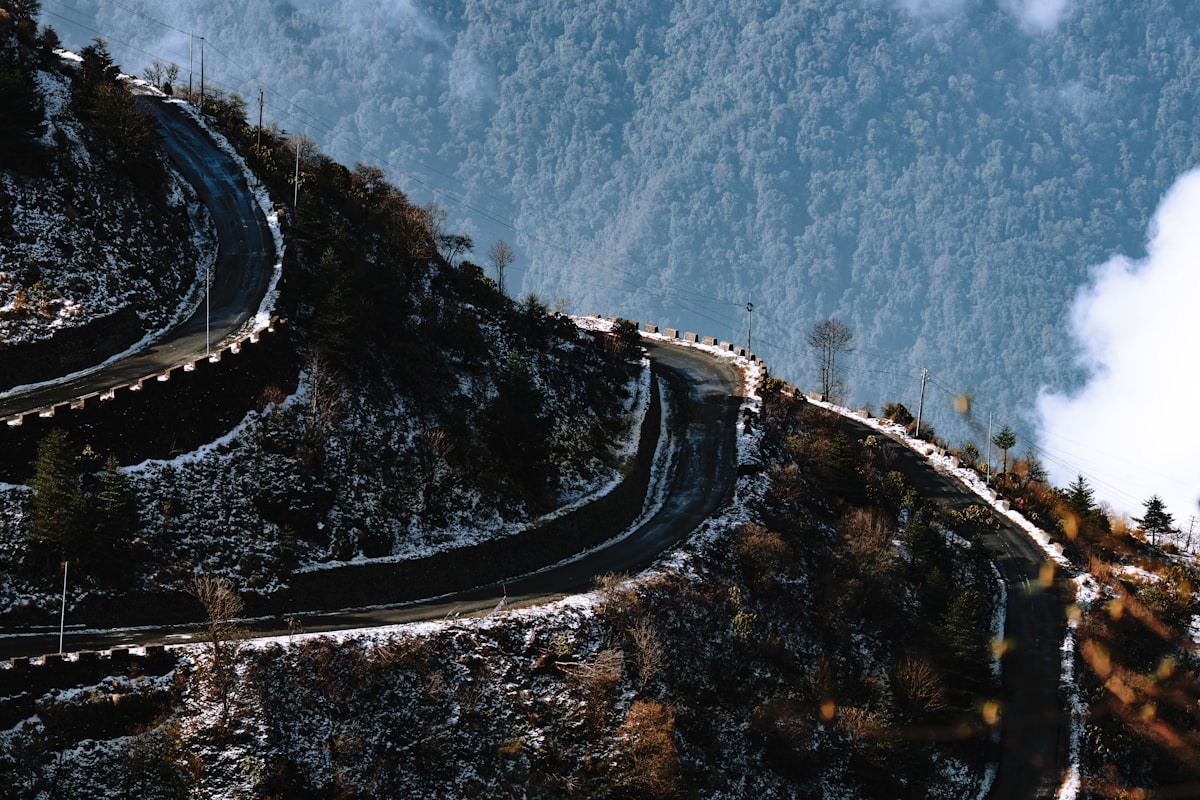
Meghalaya translates to "abode of the clouds." Most Indian states have names that feel like afterthoughts, but this one earns it. You'll be driving through the Khasi Hills, visibility drops to ten feet, and then the fog parts for half a second and you realize you're on the edge of a canyon that goes down forever. Then the clouds swallow everything again.
The state sits on a plateau in Northeast India, sandwiched between Assam and Bangladesh. Rivers here run so clear that boats look like they're suspended in air. Forests have stayed untouched for centuries because local Khasi communities consider them sacred (break a twig and you'll be told you've invited a curse). And then there are the living root bridges, actual functioning bridges grown from tree roots over decades, which sound like something out of a fantasy novel but are very much real and very much walkable.
Most people need about 5 to 7 days to see the highlights. Here's what's worth your time, what isn't, and how to stitch it all together.
Shillong
The state capital. Most people land in Guwahati and drive here (about 3 hours), and then use Shillong as a base for everything else. The temptation is to just sleep one night and rush off to Cherrapunji the next morning. That would be a waste.
Shillong has this unusual energy. It feels less like a North Indian hill station and more like a small town in Thailand or Myanmar. The cafe culture surprised us. Dylan's Cafe near Police Bazaar does wood-fired pizza that has no business being this good in a hill town in Meghalaya. Cloud 9 has a rooftop with views that match the name on clear evenings.
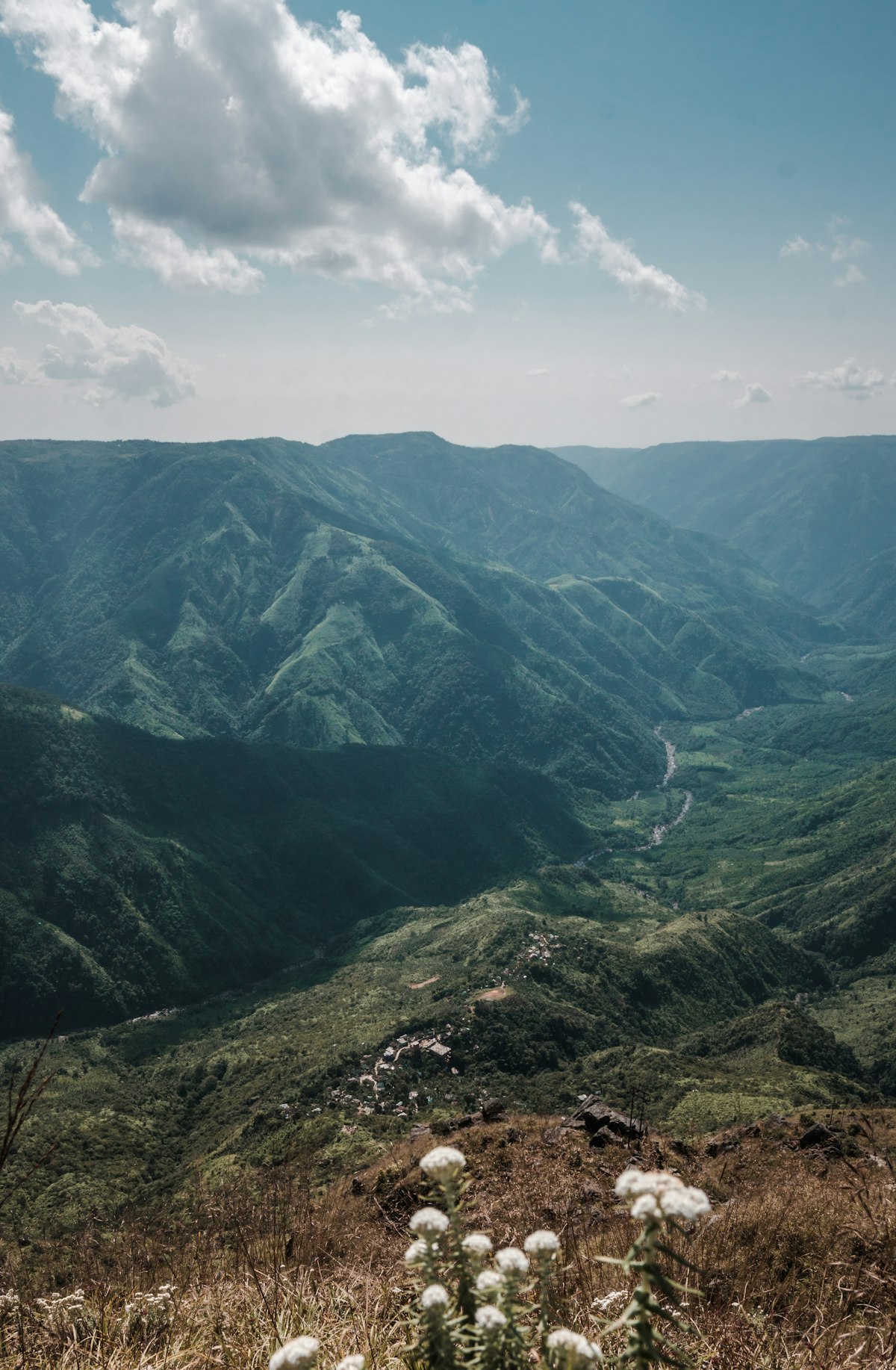
Laitlum Canyons in Meghalaya, with endless green hills fading into the clouds
The place we'd actually rearrange your itinerary for is Laitlum Canyons, about 25 km outside the city. "Laitlum" means "end of the hills" in Khasi and the name is accurate. You stand at the viewpoint and the ground just drops away into layered green valleys. There's a 3,000-step stairway down into the canyon if you're feeling ambitious. Go before 8 AM while the light is good and the tourist vans haven't arrived.
Don Bosco Museum is seven floors of Northeast Indian tribal cultures. We almost skipped it ("museum" doesn't exactly get the pulse racing) and would have regretted it. Two hours, INR 100 entry. Does more to help you understand Meghalaya than any blog post can.
Shillong also calls itself the "Rock Capital of India" and on weekends you can find local bands playing blues and metal in venues around Police Bazaar and Laitumkhrah. Ask your host what's happening. Nothing's advertised properly, which is part of the charm.
Skip Elephant Falls. It's a small cascade next to a parking lot. Every rickshaw driver will push it. Save your time.
Book a homestay in Shillong instead of a hotel. Khasi home cooking, especially jadoh (rice cooked in pork blood and spices), is reason enough. Your host will also know things about the city that Google doesn't.
Two nights is right. One if you're rushed.
Cherrapunji (Sohra)
Locals call it Sohra. The colonial name stuck for tourism purposes. It once held the world record for the most rainfall in a calendar year, which sounds miserable, but in the dry months (November through February) the skies clear up completely and you get the full force of the landscape without getting soaked.
Nohkalikai Falls
340 meters. India's tallest plunge waterfall. The viewpoint is an easy walk from the parking area, and even in dry season when the flow thins out, the turquoise pool at the base and the sheer scale of the drop make it worth the stop. During monsoon the water volume is something else entirely. Mist reaches you from hundreds of meters away.
There's a dark local legend behind the name. Ka Likai was a woman who, upon discovering something unspeakable, threw herself off these falls. "Nohkalikai" literally means "Jump of Ka Likai." Ask a local guide for the full story. It changes how you look at the place.
Seven Sisters Falls cascading down limestone cliffs in Meghalaya
Seven Sisters Falls
Best seen from the Eco Park viewpoint across the valley in late afternoon light. During peak monsoon all seven streams are going full force and it's properly dramatic. In dry season you'll see maybe two or three. The Eco Park itself is skippable beyond the viewpoint.
The Living Root Bridges at Nongriat
This is the thing. The reason people fly across the country to visit Meghalaya.
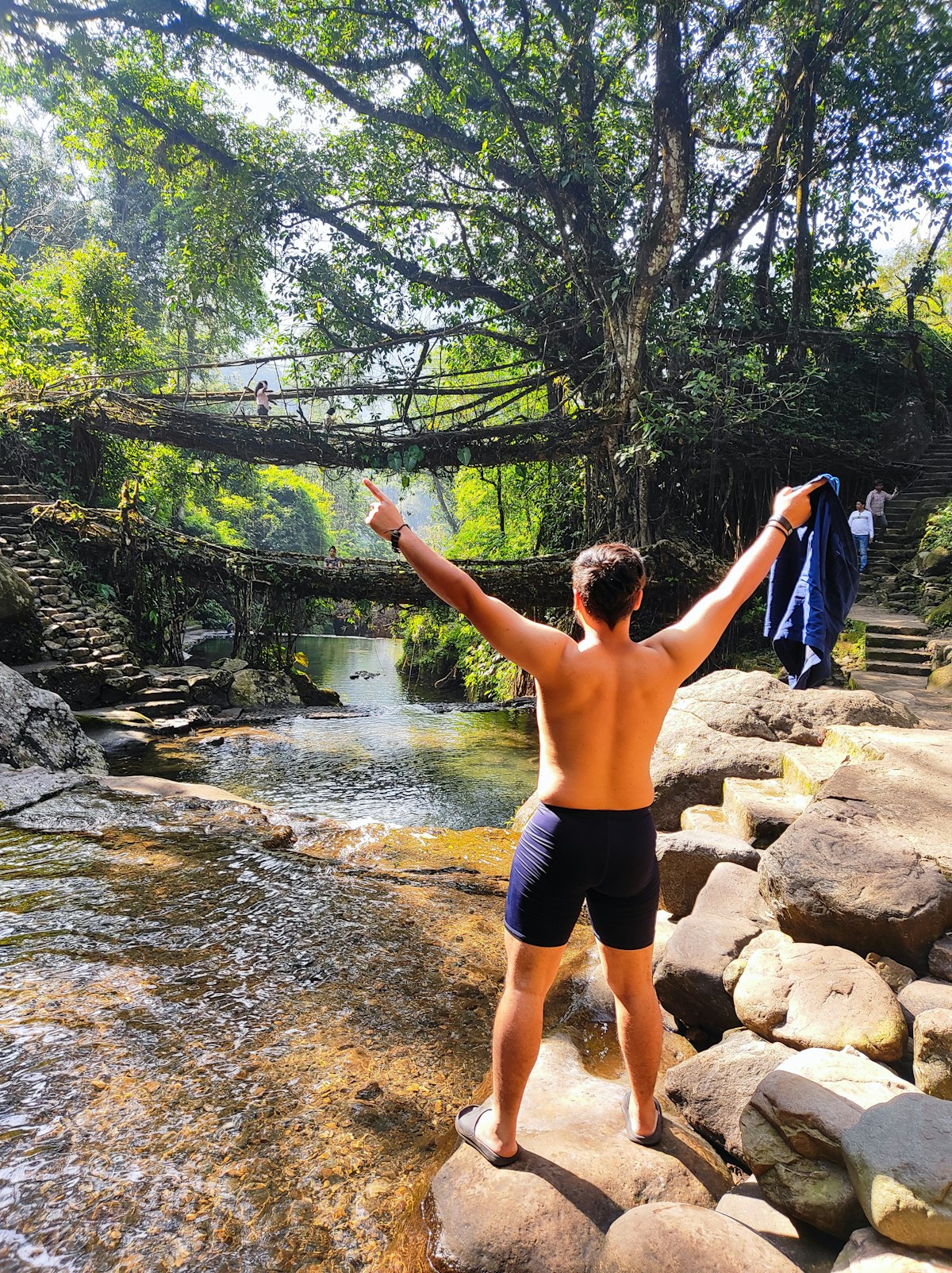
From Tyrna village (12 km outside Sohra), you descend roughly 3,500 hand-laid stone steps into a gorge to reach Nongriat village. Down there, the Khasi people have spent generations training the aerial roots of rubber fig trees to grow across rivers, forming living bridges that actually get stronger with age. The Double Decker Root Bridge is exactly that: two root bridges stacked on top of each other over a river, in the middle of dense subtropical forest.
The Double Decker Living Root Bridge at Nongriat, Meghalaya
The descent takes 1.5 to 2.5 hours. The ascent back up takes 2 to 4 hours and will make you question your life choices. We have a complete trek guide with all the details, but the short version: stay overnight in Nongriat village (basic guesthouses, INR 300-500/night). Having the bridge to yourself at dawn, mist rising off the river, zero tourists, is worth sleeping on a thin mattress for.
If you stay overnight, walk 45 minutes further to Rainbow Falls. On sunny mornings the spray creates an actual permanent rainbow. It sounds like marketing copy but it's just physics and it's real.
Mawsmai Cave is nearby, a well-lit limestone cave, and takes 30 minutes. Fine as a quick stop, not a destination.
Browse stays in Cherrapunji. Several guesthouses have valley views that will make you cancel your afternoon plans in favor of sitting on the balcony with a cup of Meghalaya red tea.
Dawki and Shnongpdeng
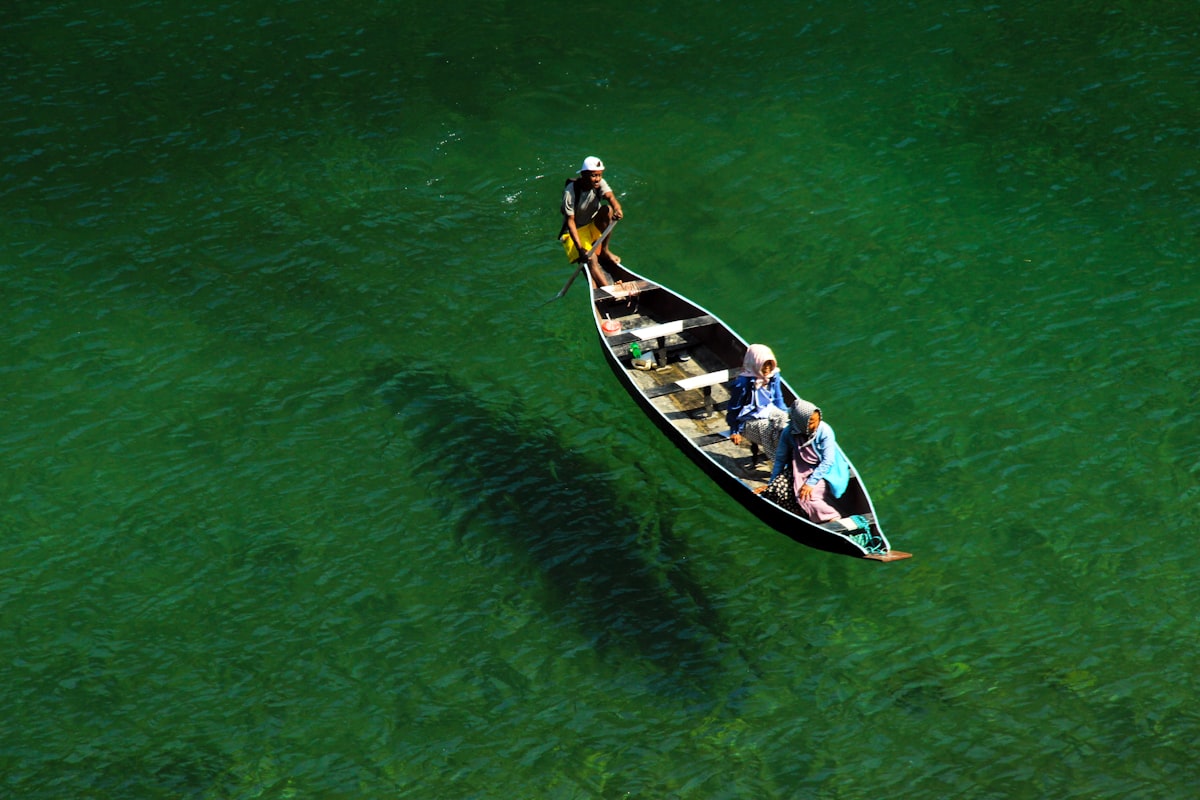
The famous crystal-clear river photos are from here. Boats that look like they're floating on glass. Riverbed visible in perfect detail.
Important caveat: that clarity only happens from about November through January, peaking in December. Visit during or after monsoon and the water runs muddy green. Still a pretty river, but not the one from the photos.
Boats floating on the crystal-clear Umngot River at Dawki, Meghalaya
Dawki is the border town with Bangladesh where the boat photos are taken. Small place. You do the boat ride, get your photos, and you're done in an hour. Shnongpdeng is 8 km away and that's where the camping and adventure activities happen: kayaking, cliff jumping, snorkeling, zip-lining, riverside tent camps with bonfires. Our Dawki camping guide has current prices and camp reviews.
The drive from Shillong is about 80 km and takes 2.5 to 3 hours through beautiful winding roads. Pair Dawki with Mawlynnong (30 km away) on the same day or consecutive days.
Mawlynnong
Got declared "Asia's cleanest village" back in 2003 and the residents have taken it very seriously ever since. Bamboo dustbins everywhere, swept paths, an organized pride to the place that's noticeable immediately.
Tree-lined path through Mawlynnong, Asia's cleanest village in Meghalaya
You can see everything in an hour or two. The sky walk (a bamboo platform in a tall tree) gives views into Bangladesh on clear days. There's a living root bridge near Riwai village, a short walk away, that's much easier to reach than the Nongriat trek. If you can't do the big trek, this is the accessible alternative.
The nicest part is just walking around, talking to people (many speak English, Meghalaya has high English literacy rates), and eating at the small family-run places.
Mawphlang Sacred Forest
25 km from Shillong. A forest that's been protected for centuries, not by law, but by belief. The Khasi people consider it guarded by a local deity called U Ryngkew U Basa. Remove a leaf, a stone, a twig, and you invite a curse. The community enforces this with complete seriousness.
The result is a pristine old-growth forest that feels like stepping into a different century. Orchids, medicinal plants, trees draped in moss, and a quality of silence you don't find in places where humans have been extracting things for generations. You must hire a local guide at the entrance (INR 300-500). They'll walk you through for about 1.5 to 2 hours, pointing out centuries-old trees and explaining what plants locals use for what ailments. One of the best experiences in the state.
Jaintia Hills
The least-visited part of Meghalaya. Krang Suri Falls is the standout: a waterfall pouring into a turquoise swimming pool inside a natural rock amphitheater. You can swim right up to the falls. Entry is around INR 50. Weekdays are empty.
The Jaintia Hills are worth a full day if your schedule allows. If you only have 5 days for Meghalaya, this is what gets cut first. Not because it isn't beautiful, but because Sohra, Dawki, and the root bridges are in a different league.
Planning Essentials
When to Go
Season
Months
What to Expect
Post-Monsoon
October - November
Waterfalls still strong, skies clearing, everything green
Winter
December - February
Clearest skies, best for Dawki, comfortable temperatures
Spring
March - April
Warm and dry, flowers blooming
Pre-Monsoon
May
Hot, occasional storms, fewer tourists
Monsoon
June - September
Spectacular waterfalls but constant rain, flooded roads, leeches
Getting There and Around
Fly into Guwahati. Shared taxi to Shillong is INR 400-600/person (3 hours). Private cab is INR 2,500-3,500.
No useful train network within Meghalaya. Your options: hire a car with driver (INR 2,500-3,500/day, best option), shared taxis between towns (cheap, cramped, unpredictable schedules), or self-drive if you're comfortable with mountain roads.
Budget
Category
Budget
Mid-Range
Comfort
Accommodation/day
INR 500-1,000
INR 1,500-3,000
INR 4,000-8,000
Food/day
INR 300-500
INR 600-1,000
INR 1,200-2,000
Transport/day
INR 400-700
INR 800-1,500
INR 2,000-3,500
Activities/day
INR 100-300
INR 300-800
INR 500-1,500
Suggested 5-6 Day Route
Day 1: Guwahati to Shillong. Police Bazaar, eat well.
Day 2: Laitlum Canyons, then Mawphlang Sacred Forest.
Day 3: Drive to Sohra. Nohkalikai Falls, Seven Sisters, Mawsmai Cave.
Day 4: Trek to Nongriat. Stay overnight at the root bridges.
Day 5: Climb back up. Drive to Dawki/Shnongpdeng. River camping.
Day 6: Mawlynnong in the morning. Back to Shillong, then Guwahati.
What to Pack
Rain gear (it's Meghalaya). Proper trekking shoes for the root bridges. Layers for Shillong evenings (1,500m elevation, gets cold). Cash (UPI barely works outside Shillong). Insect repellent for the forests.