Month-by-month guide to Sikkim and Darjeeling. What each season actually feels like on the ground, from spring rhododendrons to winter snowfall to monsoon chaos.
Short answer: October or November. Post-monsoon, clear skies, Kanchenjunga visible every morning, comfortable temperatures, everything still green from four months of rain. If you only want one sentence, that's it. Book your Gangtok stay or Darjeeling accommodation for that window.
But Sikkim and Darjeeling change dramatically with the seasons, and depending on what you care about (trekking, photography, rhododendrons, solitude, festivals) the answer shifts. Each month has a distinct personality.
Cold. Properly cold. Darjeeling mornings hit you the moment you step outside. You'll be sleeping in thermals.
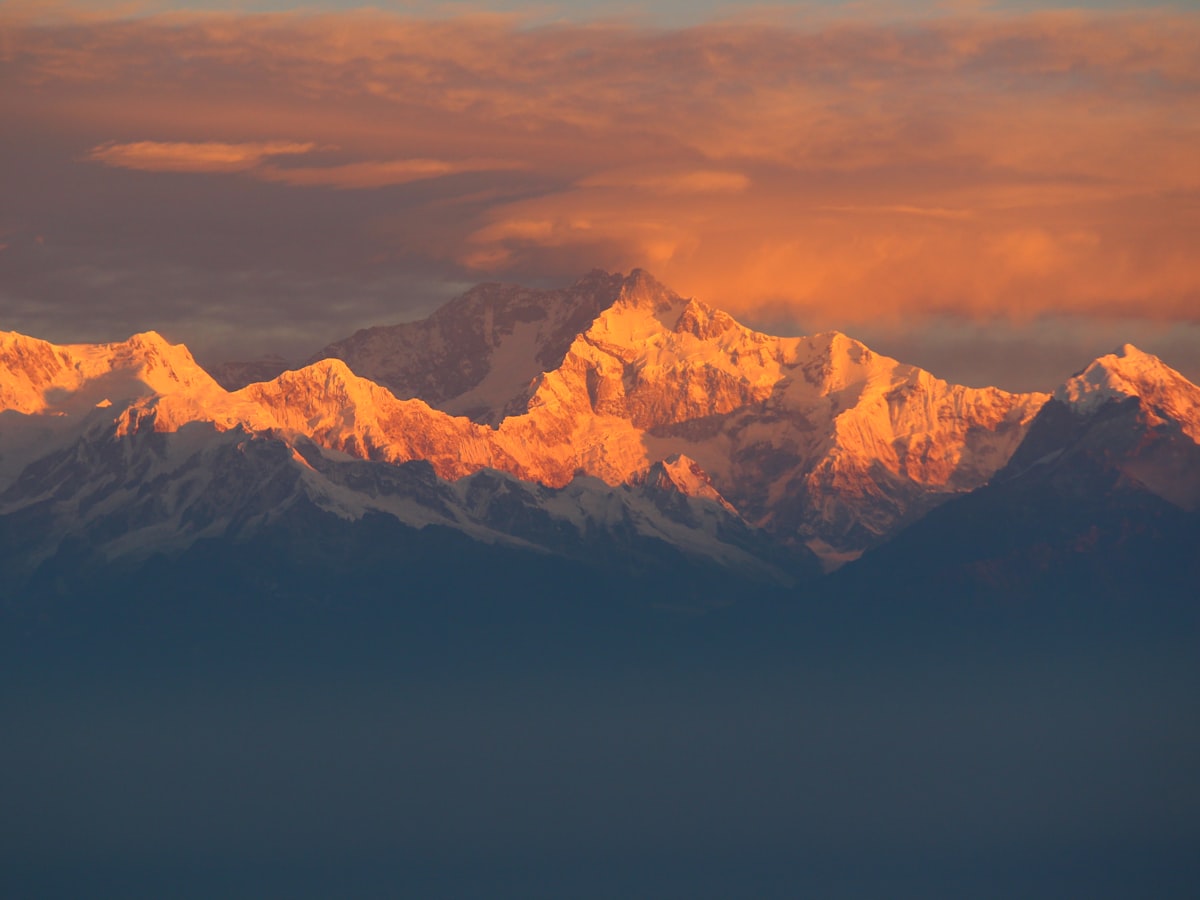
The trade-off is the sky. January and February have some of the clearest mountain visibility of the year. Kanchenjunga looks sharp enough to cut glass against deep blue sky. Tourist crowds drop to almost nothing. Hotels cut prices 30-50%. The monasteries are empty. The tea estates are empty. You'll sit in a Darjeeling cafe, hands around a cup of first flush, watching snow peaks catch morning light, and nobody will be in your way.
Higher-altitude destinations (Tsomgo Lake, North Sikkim) may be snowed in and inaccessible. Most high-altitude treks are closed. But if you're after quiet, clear views, and lower prices, winter delivers.
Kanchenjunga's snow-capped peak towering above the clouds
March and April
Gangtok: 8-20 degrees. Darjeeling: 6-18 degrees.
Sikkim has 36 species of rhododendron. In late March and April, they all go off at once. Hillsides from 2,500 meters up turn red, pink, white, and purple. Barsey Rhododendron Sanctuary in West Sikkim is the place to see it. The trail passes through what can only be described as a tunnel of flowers. The Singalila Ridge trek between Darjeeling and Nepal is also spectacular during this window.
Temperatures are comfortable. Skies are mostly clear with occasional afternoon clouds. Darjeeling's tea gardens are harvesting the first flush, the most prized and expensive tea in the world. You can taste it where it's picked.
Haze builds by late April. Views get less reliable. Lower elevations start to feel warm.
May is unpredictable. Some years you get warm clear days with afternoon thunderstorms that clean the air. Other years the monsoon arrives early and it's grey skies and drizzle for weeks.
When the weather cooperates, it's comfortable for exploration. The Goechala Trek (Sikkim's best high-altitude trek, face-to-face views of Kanchenjunga's south face) opens in late April and runs through May.
This is peak domestic tourist season. Darjeeling in May is packed. Mall Road shoulder-to-shoulder. Hotels at peak pricing. Shared taxis a fight. If crowds bother you, skip May.
This needs to be said plainly because too many guides skim over it with "expect some rain."
It is not some rain. It rains constantly. It rains while you eat. It rains while you sleep. It rains during the twenty-minute window when it looked like it might stop. Your shoes stay wet for the duration of the trip. Your camera fogs up the moment you take it out. Everything is damp all the time.
Roads become dangerous. Landslides on the Siliguri-Gangtok highway happen multiple times every monsoon season. Some clear in hours. Some take days. In 2023, a major slide cut off parts of Sikkim for weeks. This isn't a freak occurrence. It's seasonal reality.
Leeches are in every forest. Harmless, but the feeling of finding one inside your shoe is something you remember.
Kanchenjunga disappears. You might spend four days in Darjeeling and never see a mountain.
Why would anyone go? The waterfalls are at their peak. The green is the greenest you'll see anywhere. Cloud dynamics are theatrical. Tourist crowds vanish entirely. Cultural festivals (Saga Dawa, Rath Yatra) happen during monsoon. If you thrive in wild weather and want a place to yourself, there's something to it. But for most people, June through September creates more problems than it solves.
October and November
Gangtok: 8-20 degrees. Darjeeling: 6-18 degrees.
The best time. The consensus is correct.
Monsoon retreats in early October. The sky clears to a depth that makes you realize how hazy the rest of the year actually was. Kanchenjunga reappears, massive and close-looking, and the golden afternoon light on the snow peaks is the best photography light these mountains offer all year.
October days are warm. Evenings are cool. Every trek is open. Every road is passable. Every viewpoint delivers. Diwali and Tihar fall in this window and are celebrated warmly here; hillsides twinkle with oil lamps.
It's peak season. Book accommodation 3-4 weeks ahead. Prices are highest. Tiger Hill and Tsomgo Lake will have company.
December
Gangtok: 3-13 degrees. Darjeeling: 2-10 degrees.
November with an extra sweater. Skies stay clear through mid-December. Cold keeps crowds thin. Photography conditions are excellent: low winter sun, long shadows, warm tones.
Christmas in Darjeeling has its own character. There's a significant Christian population. Churches lit up, carol singing in the streets. It feels different from the rest of India.
Higher routes start closing late in the month, but the standard tourist circuit (Gangtok, Darjeeling, Pelling) remains accessible.
Quick Reference
Month
Kanchenjunga Visibility
Gangtok Temp
Crowds
Trekking
Rating
January
Excellent
2-12 degrees
Very Low
Limited
Good
February
Excellent
3-14 degrees
Low
Limited
Good
March
Good
7-18 degrees
Moderate
Opening
Very Good
April
Good (declining)
10-22 degrees
Moderate
Excellent
Very Good
May
Variable
14-24 degrees
High
Excellent
Mixed
June
Poor
16-25 degrees
Very Low
Risky
Avoid
July
Very Poor
17-25 degrees
Very Low
Dangerous
Avoid
August
Very Poor
17-25 degrees
Very Low
Dangerous
Avoid
September
Poor
15-24 degrees
Very Low
Opening
Poor
October
Excellent
10-22 degrees
High
Excellent
Best
November
Excellent
5-17 degrees
High
Excellent
Best
December
Excellent
3-13 degrees
Moderate
Good
Very Good
Seasons as Experiences
Winter (December to February) is for people who like quiet. Empty monasteries, silent trails, the kind of cold that makes hot tea taste religious. The Tibetan Buddhist monasteries at Rumtek, Pemayangtse, and Enchey have a different weight when the prayer wheels turn and nobody's there but you and the monks.
Prayer flags fluttering against a Himalayan mountain backdrop
Spring (March to April) is for color. Rhododendrons, orchids (Sikkim has 500+ species), butterflies in numbers that seem wrong, tea gardens glowing with new growth. There's an energy to the place, everything waking up at once.
Autumn (October to November) is for everything. The weather, the views, the festivals, the post-monsoon lushness with clear sky above it. If you have flexibility and no strong seasonal preference, this is the default answer for a reason.
What to Pack
October to February: Thermals (essential November onward), down jacket or heavy fleece, waterproof outer layer (mountain weather shifts fast), warm hat and gloves in deep winter, good walking shoes, sunscreen (high-altitude sun burns), lip balm.
March to May: Layers (cool mornings, warm afternoons), light rain jacket, trekking boots if you're hiking, insect repellent from May onward.
June to September: Full waterproofs (jacket, pants, bags for electronics), quick-dry everything (no cotton), leech socks, multiple dry bags, a tolerance for being continuously damp.
Outside of monsoon, there's no bad time. Each season gives you a different trip. October-November is the standard recommendation and it's earned. But February's empty mountain silence or March's rhododendron explosions are their own kind of unforgettable.
The one genuinely wrong choice is monsoon without knowing what monsoon means. The rest is just different flavors of a place that delivers year-round.