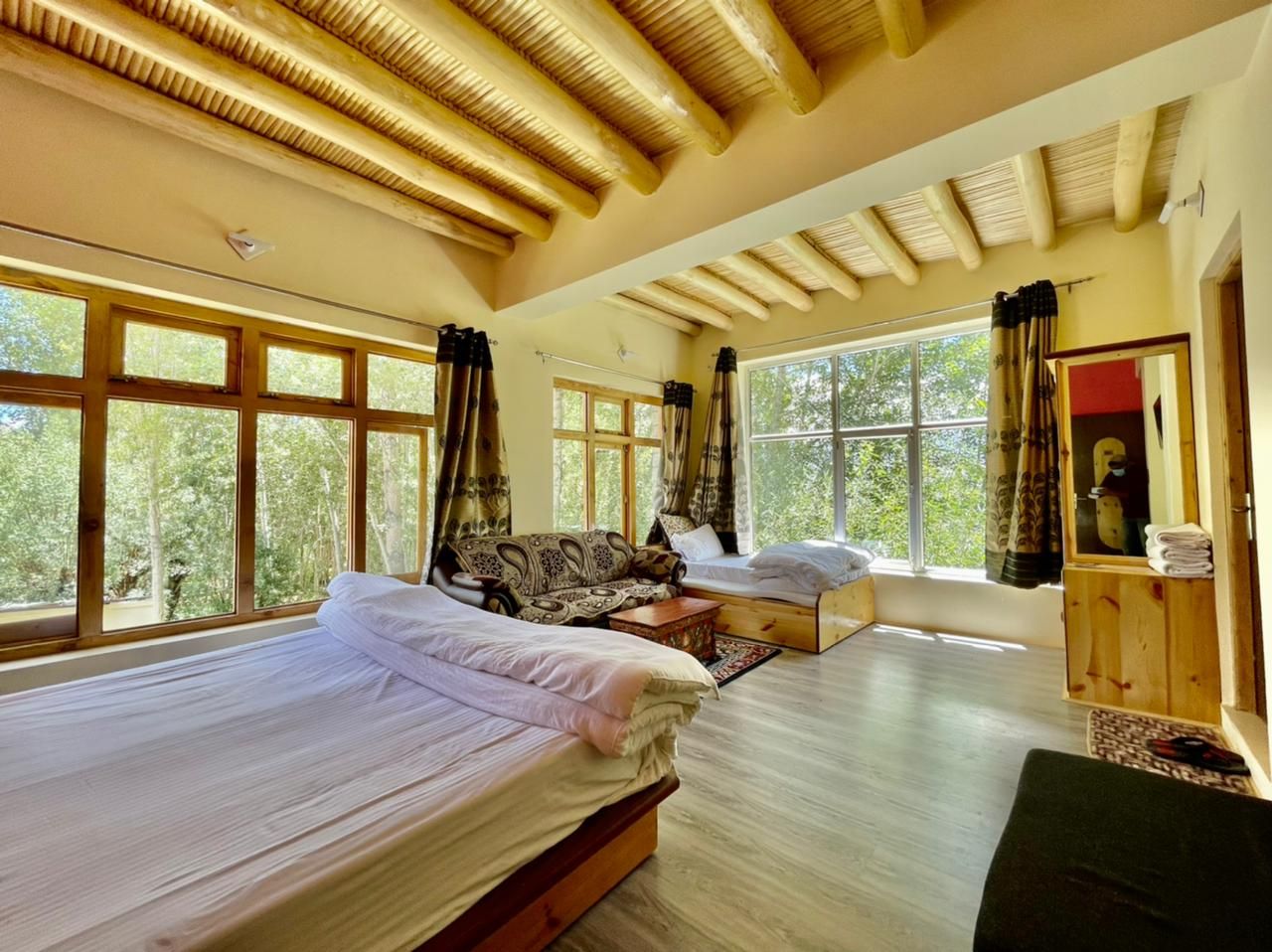
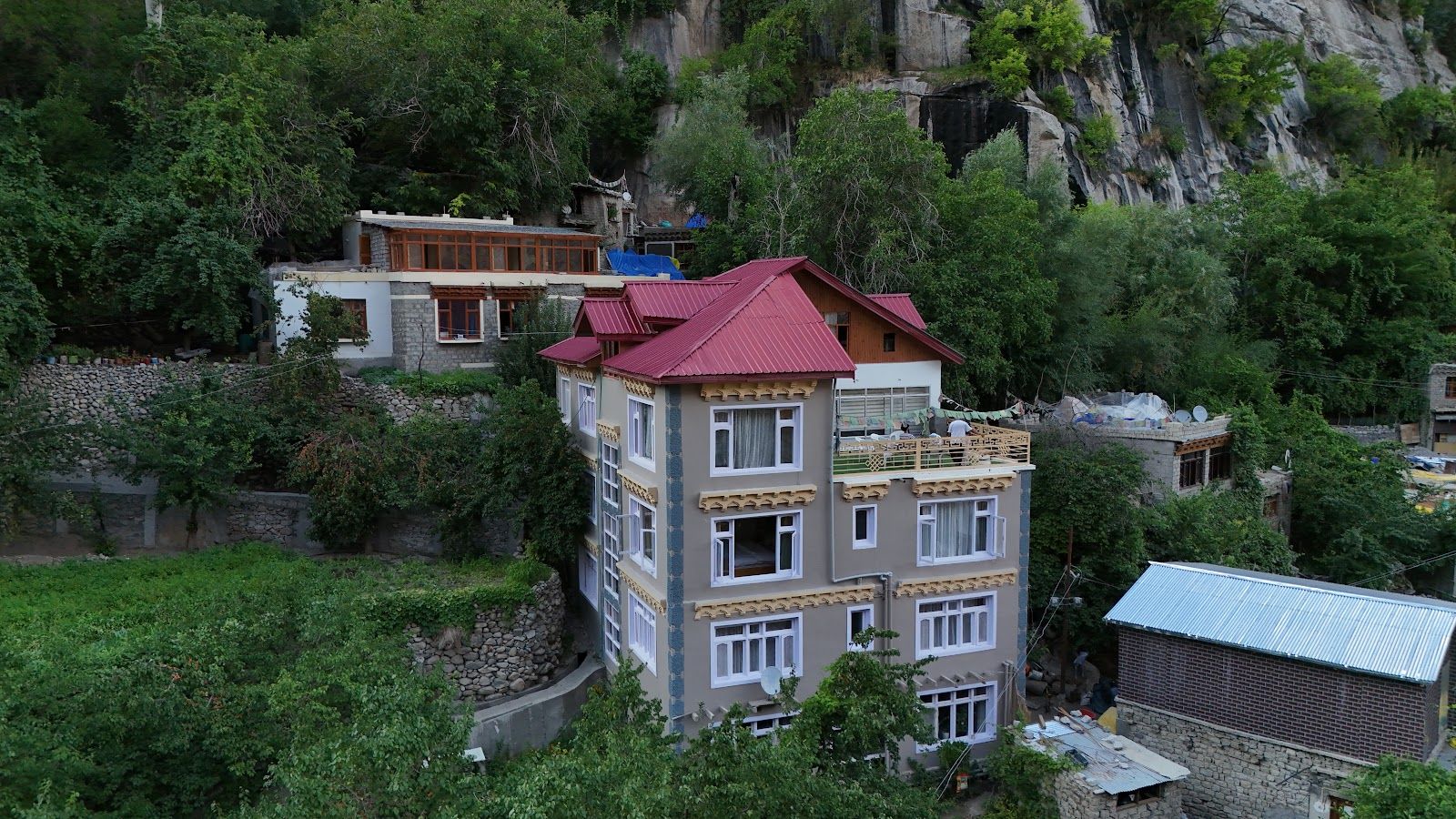
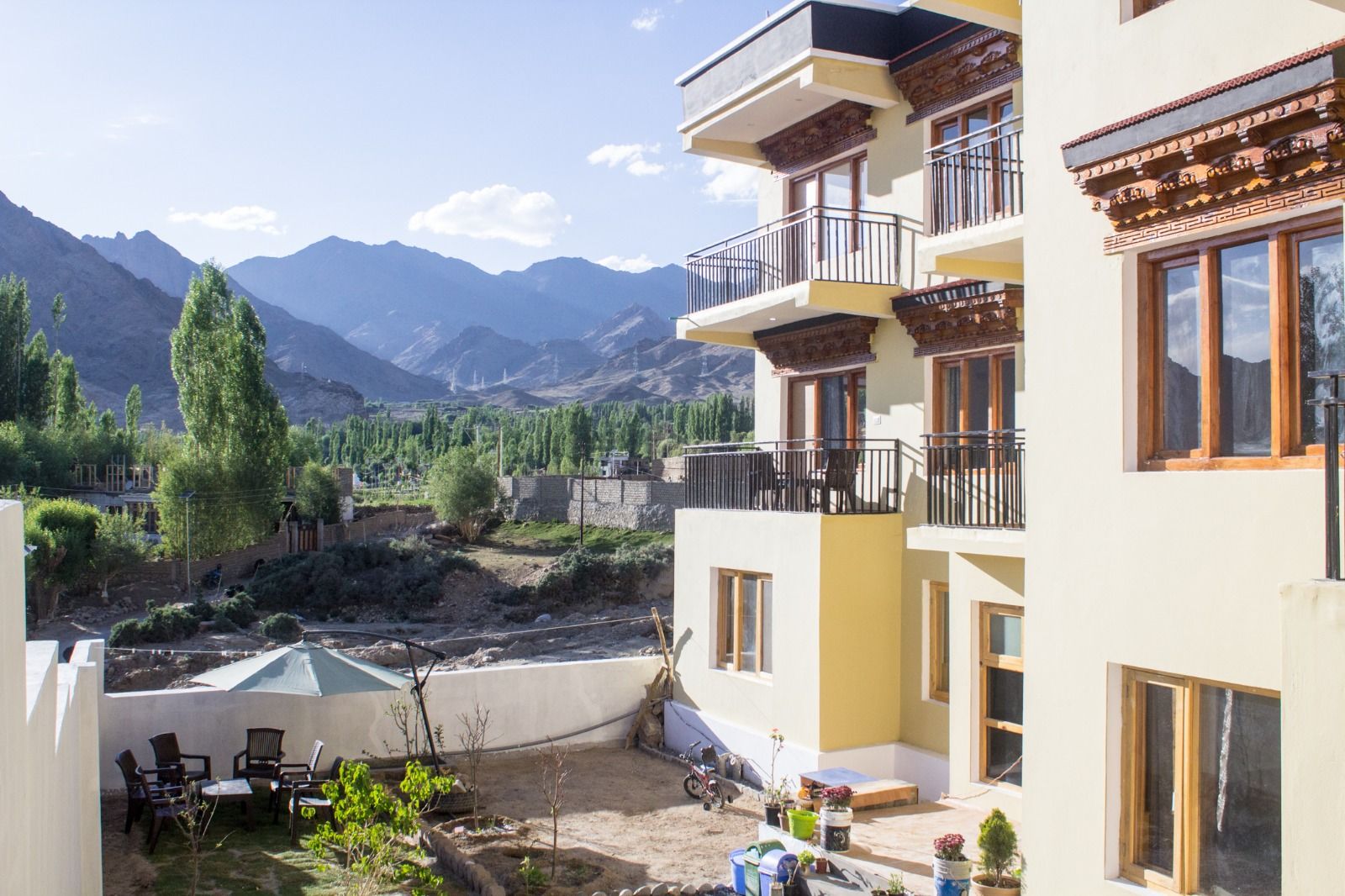
Butter Chicken Meals Lodge, Main Market, Ladakh
4.6· 193 stays
Things to do nearby.
Leh is the hub for exploring the wider Ladakh region. From here, you can drive to some of the Trans-Himalaya's most iconic landscapes.
Pangong Tso is the famous high-altitude blue lake on the border with China, about a 160km drive from Leh. The journey itself is a major part of the experience.
Nubra Valley is reached by driving over Khardung La, one of the world's highest motorable passes. The valley is known for its stark sand dunes at Hunder, where you can see double-humped Bactrian camels.
Tso Moriri is a quieter, more remote lake than Pangong, located about 220km from Leh. It's a protected wetland reserve and a breeding ground for brown-headed gulls and other birdlife.
Closer to Leh, you can do a half-day loop through the Indus Valley to visit the monasteries at Hemis and Thiksey, two of Ladakh's most important spiritual centres.
Another half-day trip west of Leh takes you to the Zanskar-Indus sangam (confluence), the optical illusion of Magnetic Hill, and the historic Gurudwara Pathar Sahib.
Getting there.
The easiest way to reach Ladakh is by air, though road journeys are possible in the summer.
By Air: The nearest airport is Kushok Bakula Rinpoche Airport (IXL) in Leh. Flights are typically in the morning due to weather conditions, and diversions are common. The home is within Leh town.
By Rail: There is no railway line in Ladakh. The nearest major railhead is Jammu Tawi, 700km away. From there, you would need to travel by road via Srinagar.
By Road: Leh is the main road hub. The Leh-Manali highway (470km) is open from June to mid-October. The Leh-Srinagar highway (420km) is generally open from April to end-November. Kargil is the halfway point to Srinagar, about 220km from Leh.
Best time to visit.
The best time to visit Ladakh is from June to September. The weather is pleasant, and all major road routes and passes are open. By October, temperatures drop, and snow can lead to road closures. The Leh-Manali highway typically shuts by mid-October, followed by the Leh-Srinagar road at the end of November.