Cliffside Homestay in Cherrapunji, Meghalaya
4.4· 662 stays
Things to do nearby.
The Nohkalikai Falls drop 340 metres straight down a cliff face just a short drive from the home. It is best visited in the early afternoon before thick fog rolls across the viewpoint.
The Mawsmai and Krem Phyllut caves sit within easy driving distance. You should carry a light torch and wear sturdy footwear for navigating the narrow limestone passages and damp rock floors.
The Nongriat double-decker living root bridge requires a steep trek descending roughly 3,500 stone steps down the valley from Tyrna village. Plan a full day for this hike, take plenty of water, and hire a local guide at the trailhead.
The Umngot River at Dawki lies about 95 km away toward the border, where the water runs clear as glass between January and March. Local boatmen take visitors along the riverbed during these dry winter months.
Mawlynnong village and the nearby Riwai sky walk offer a day trip through bamboo paths and manicured gardens, located along the southern slopes of the hills.
Getting there.
Guwahati Airport (GAU) sits 100 km from Shillong and serves as the primary air gateway for travelers entering Meghalaya. The drive from Guwahati up to Shillong takes roughly three hours along a winding highway.
Shillong Airport (SHL) at Umroi is located 30 km from Shillong town, though direct flight connections remain limited and mostly connect through Kolkata.
Guwahati Railway Station is the nearest major railhead, located 100 km from Shillong, as there are no train lines within Meghalaya state.
From Shillong, Cherrapunji (Sohra) is a 53 km drive that takes about two hours along two-lane mountain roads that weave through high plateaus.
Best time to visit.
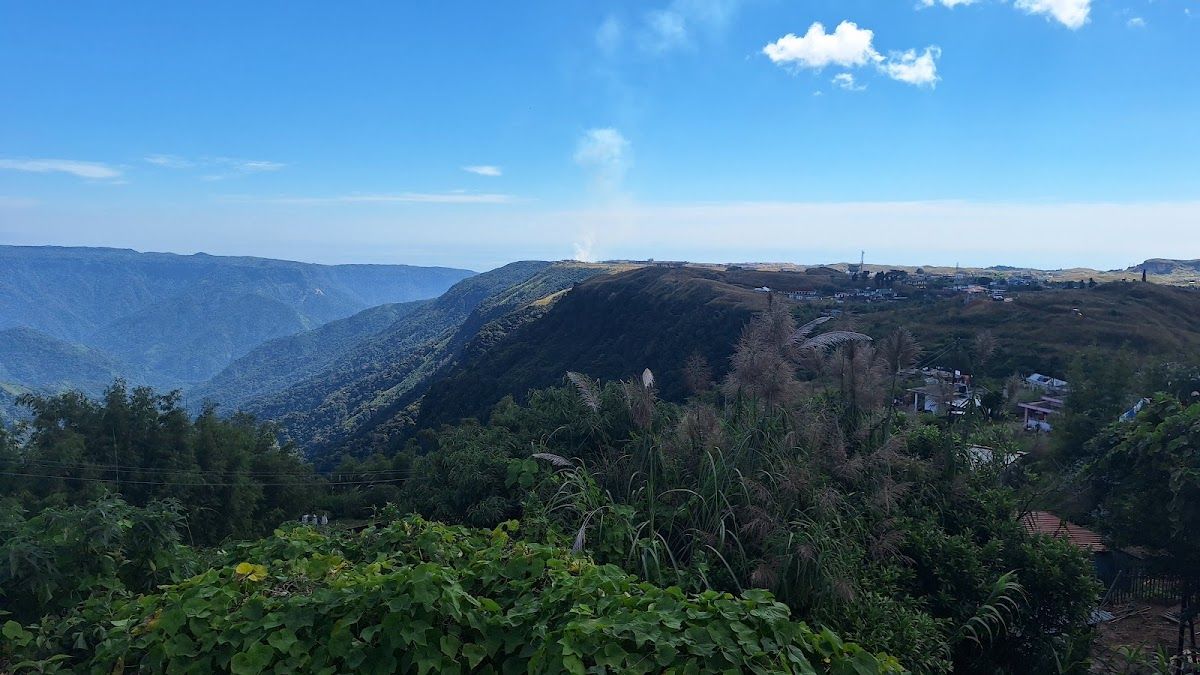
October through April brings dry weather, crisp mountain air, and clear blue skies across the Cherrapunji plateau. During these winter months, daytime temperatures stay mild while nighttime drops bring cold air ideal for campfires and stargazing. The views over the Bangladesh border remain sharp during this window.
Monsoon season runs from June through September, bringing over 10,000 mm of rainfall to the region. While some caves and steep walking tracks close for safety, the waterfalls reach full volume and the surrounding hills turn deep green under constant cloud cover.