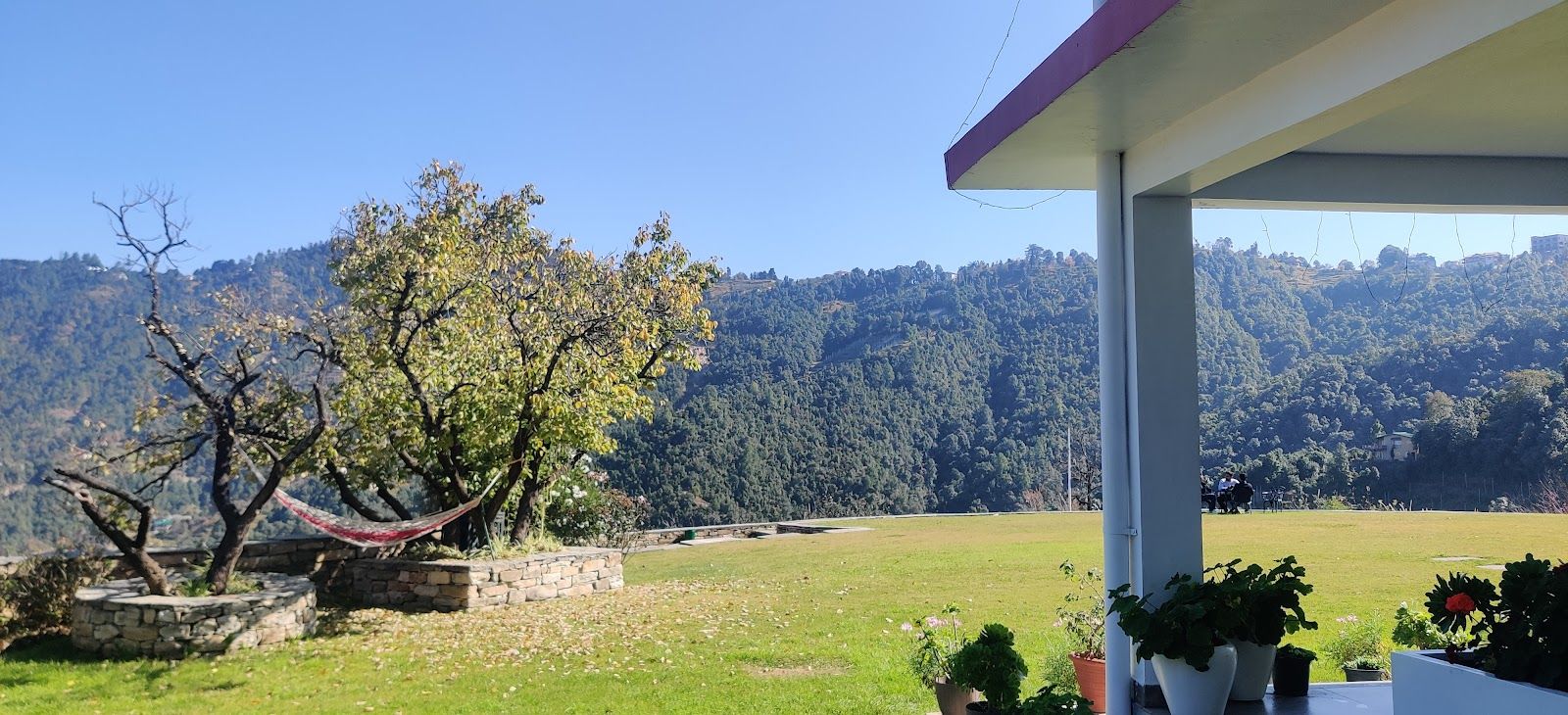
“This is the best place to stay in this property, very beautiful full of flowers bees, apples and apricot plantations, u feel u have arrived in heaven. Beautiful spacious rooms, gorgeous views from the cafe on their top floor, 360 degree views. It's out this world and one of the best experiences of a mountain stay. Coming back soon”
“Great place to stay for calm and peaceful vacation. Cordial staff. Exceptional food. Special shout out to Prakash ji, Sanjay Kumar Arya (Service Department) and the Chef!!! Thank you for making this stay memorable.”
“Real nice place to unwind. Spacious rooms, courteous staff and well maintained place. Had a real good time”
Mukteshwar is quieter than the main Kumaon lake towns, a good starting point for walks and temple visits.
Mukteshwar Temple and Chauli Ki Jali are a short drive away. The 350-year-old Shiva temple is a place of local pilgrimage, but the real highlight is Chauli Ki Jali, a cliff edge with sweeping views of the Himalayan valley. It's a popular spot for rappelling and rock climbing, or just to watch the sunset.
Jim Corbett National Park, India's oldest national park, is a few hours' drive. The Ramnagar gate is the most common entry point for tiger safaris. The park is open from October to June and is best explored on an early morning or evening jeep safari.
The town of Nainital, the main hub of the Kumaon region, is about 50 km away. It's a good destination for a day trip to see the Naini Lake, walk the Mall Road, or take the cable car up to Snow View Point.
By Air: The nearest airport is Pantnagar Airport (PGH), which serves the Kumaon region. From the airport, it is a 3-4 hour taxi ride to Mukteshwar.
By Rail: The closest major railhead is Kathgodam (KGM), located at the foothills. It is well-connected to major cities like Delhi and Kolkata. From Kathgodam, Mukteshwar is a taxi ride of about 2-3 hours.
By Road: Mukteshwar is well-connected by road. It is approximately 350 km from Delhi, a drive that takes 7-8 hours. The town is 50 km from Nainital and 40 km from Almora.
The best seasons are from March to June and again from September to November. These months offer clear skies, pleasant weather, and the best views of the snow-capped Himalayan peaks.
The monsoon season, from July to August, brings lush greenery but also the risk of landslides, which can disrupt travel plans. Winters, from December to February, are cold, with occasional snowfall. While beautiful, some higher-altitude roads and attractions may be temporarily closed.