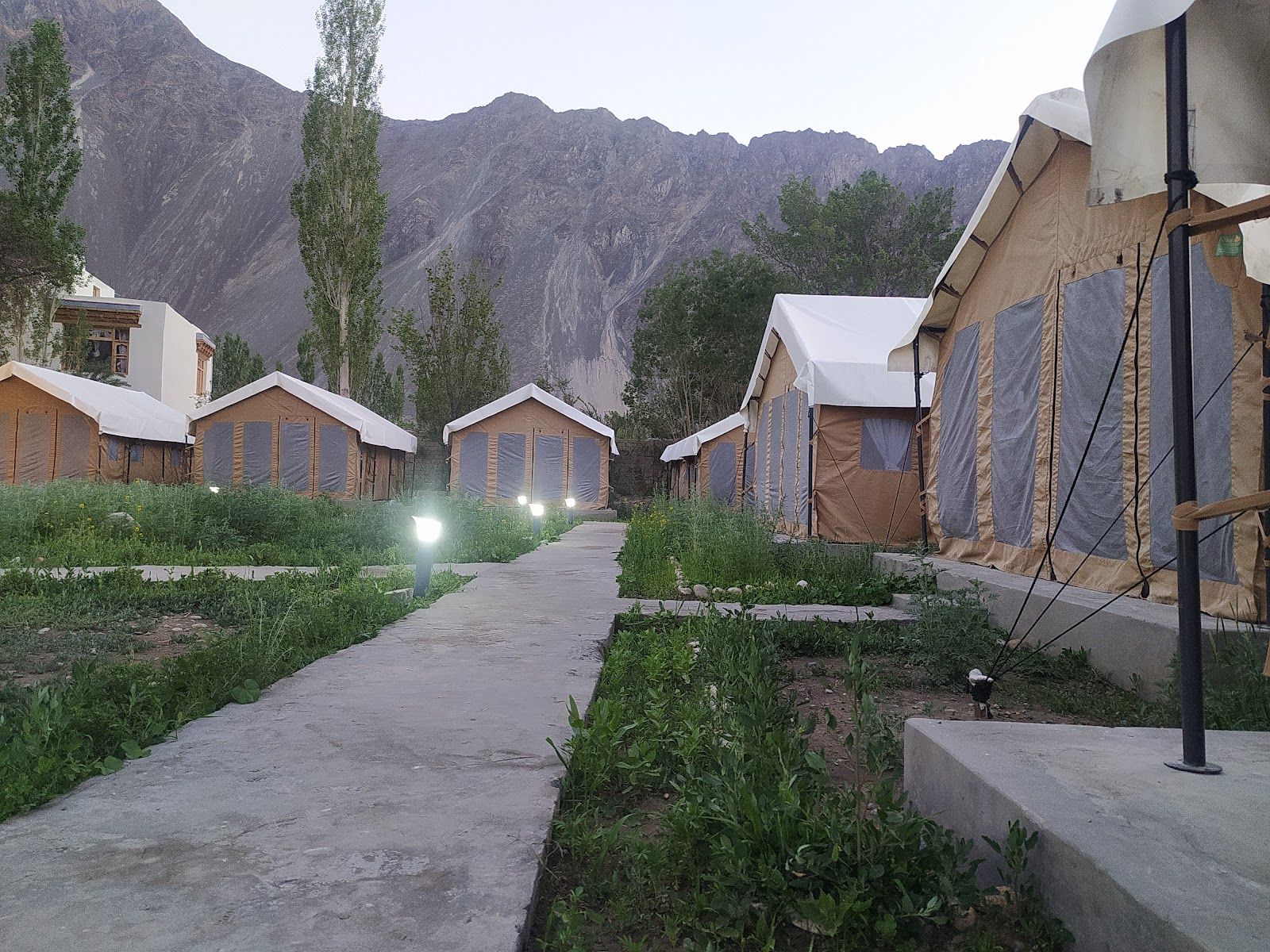
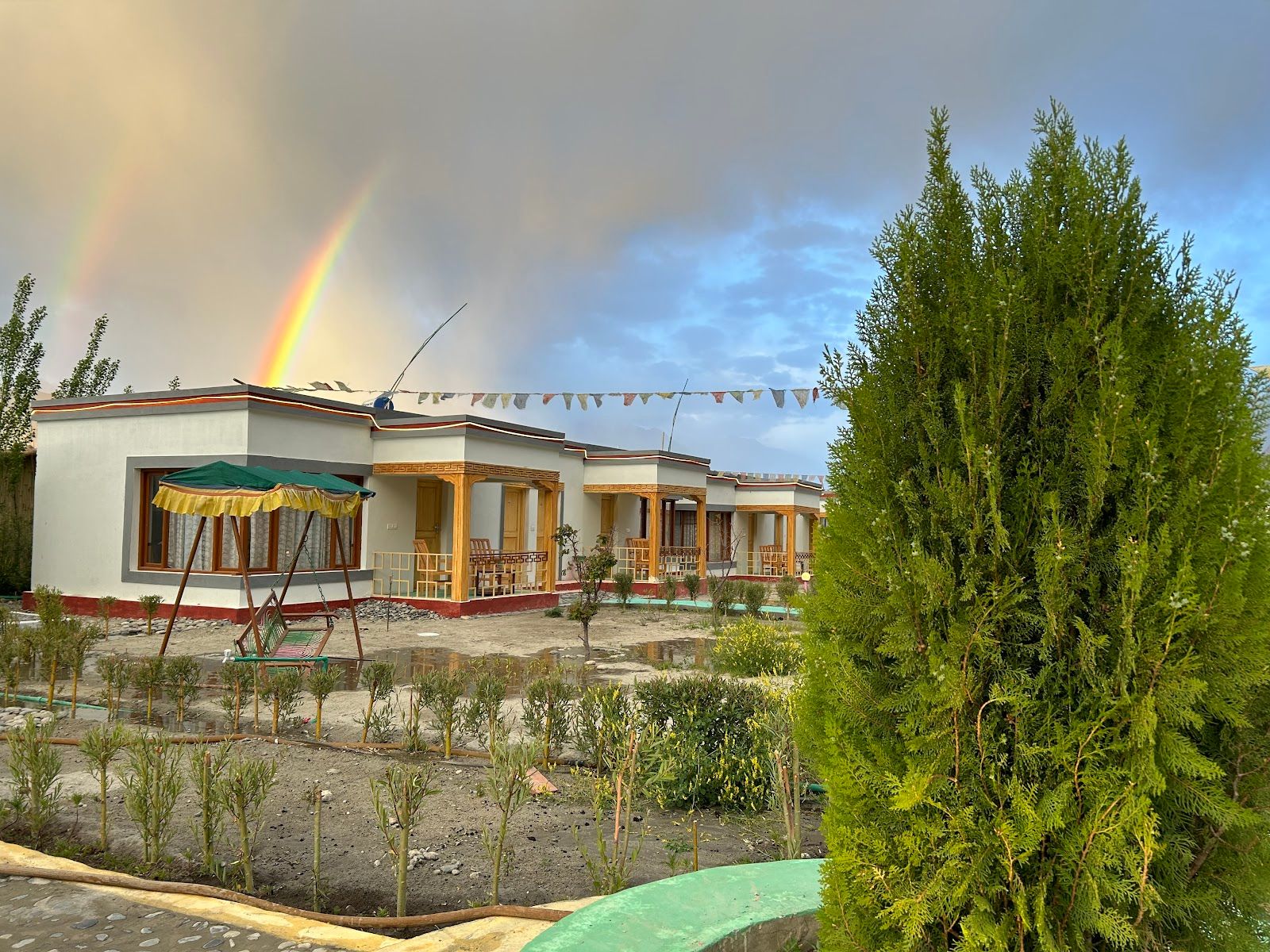
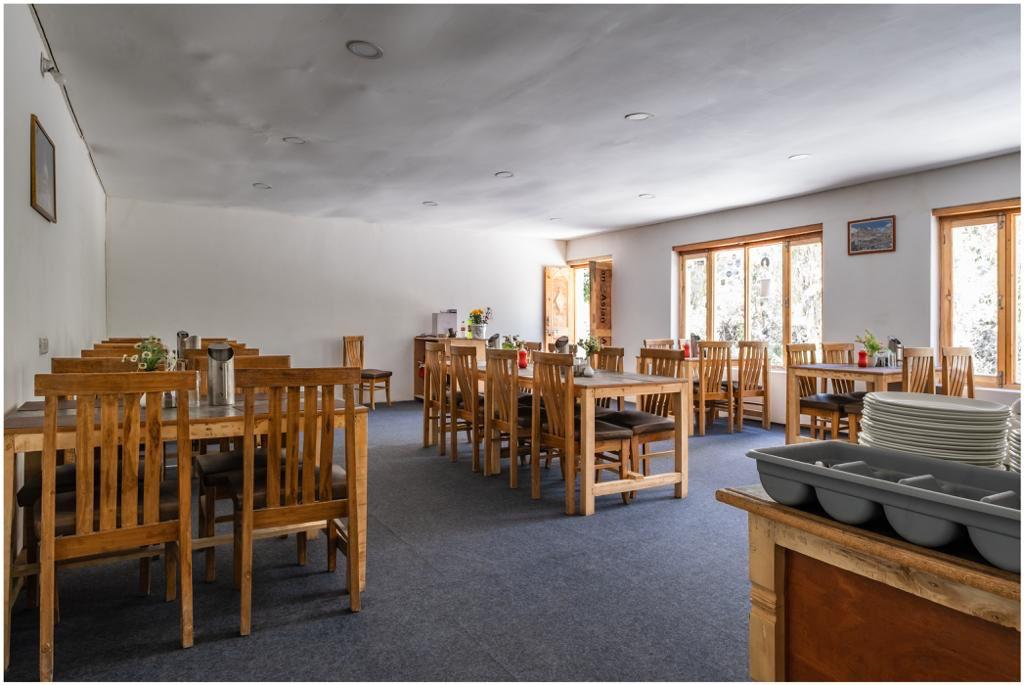
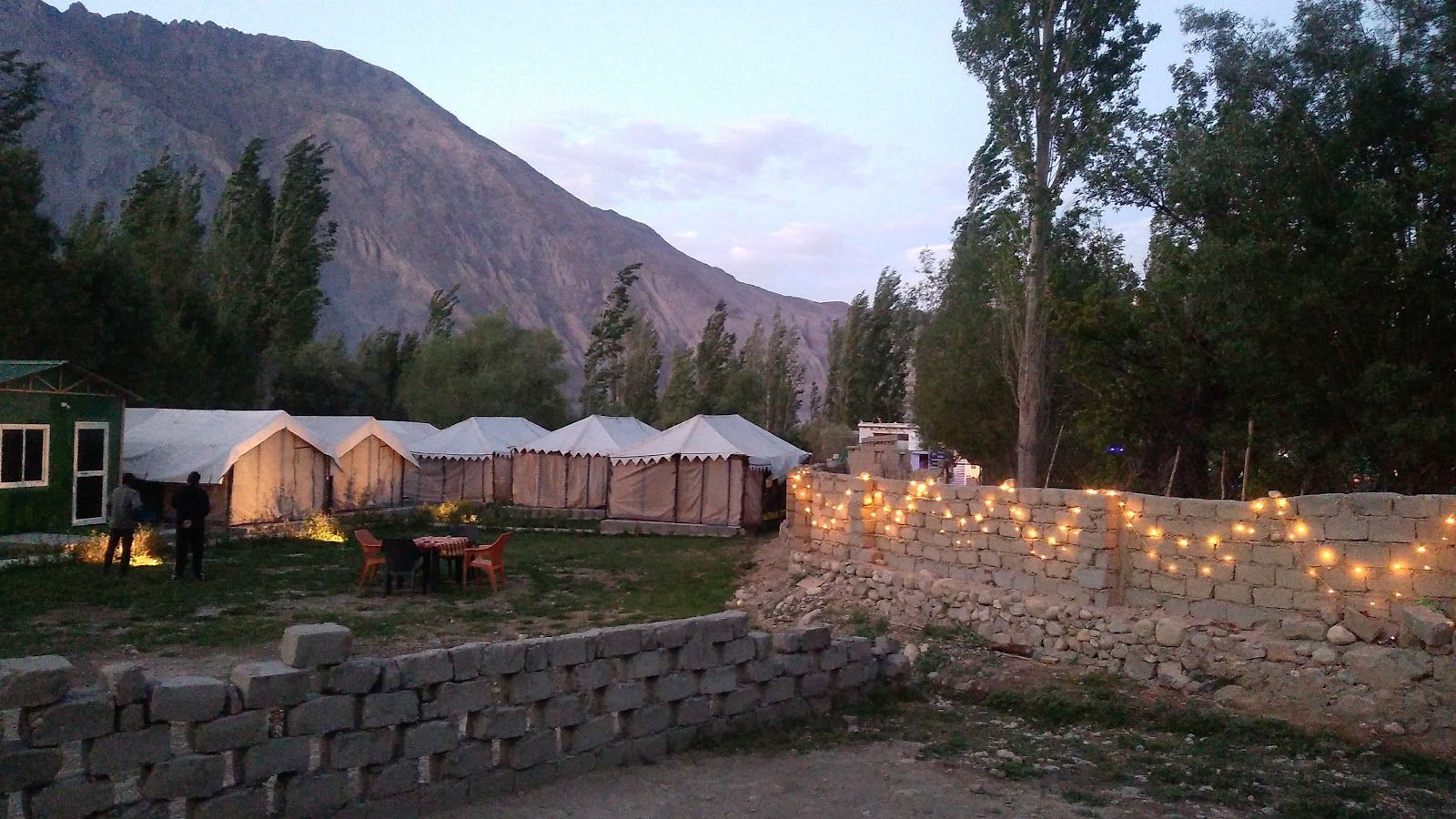
Mountain-view camp in Ladakh. Star-gazing.
4.9· 14 stays
Things to do nearby.
The camp is a base for exploring the high-altitude desert of Ladakh. You will need an Inner Line Permit for many of these journeys, which can be arranged in Leh.
Pangong Tso is a 160 km drive away, a high-altitude lake known for its shifting blue colours, right on the border with China. The journey itself is a major part of the experience.
Nubra Valley is reached by crossing Khardung La, one of the world's highest motorable passes. The valley is famous for the sand dunes at Hunder and the double-humped Bactrian camels that live there.
Tso Moriri, at 220 km away, is a quieter alternative to Pangong. It is a protected wetland reserve and a breeding ground for brown-headed gulls and other migratory birds.
Closer to Leh, a half-day trip can take you to the monasteries of Hemis and Thiksey, which cling to hillsides in the Indus valley. Another popular half-day loop heads west from Leh to see the curious Magnetic Hill, the confluence of the Zanskar and Indus rivers, and the historic Gurudwara Pathar Sahib.
Getting there.
The main entry point to the region is Leh.
By Air: Kushok Bakula Rinpoche Airport (IXL) in Leh has regular flights from major Indian cities. Flights operate only in the morning due to mountain weather, and diversions are possible.
By Rail: The nearest major railway station is Jammu Tawi, about 700 km away. From there, you must continue the journey by road via Srinagar, a multi-day trip.
By Road: Ladakh is accessible by road from two main directions, typically open from late May or June until October. The Manali-Leh Highway (470 km) crosses several high passes. The Srinagar-Leh Highway (420 km) passes through Kargil and over Zoji La.
Best time to visit.
The best time to visit Ladakh is during the summer months, from June to September. The weather is pleasant, the skies are clear, and the high passes are open for road travel. This is the peak season for tourism. By mid-October, the Leh-Manali highway often closes due to snow, followed by the Leh-Srinagar road in late November. The region remains cold and largely cut off by road through the winter.