Dear host,
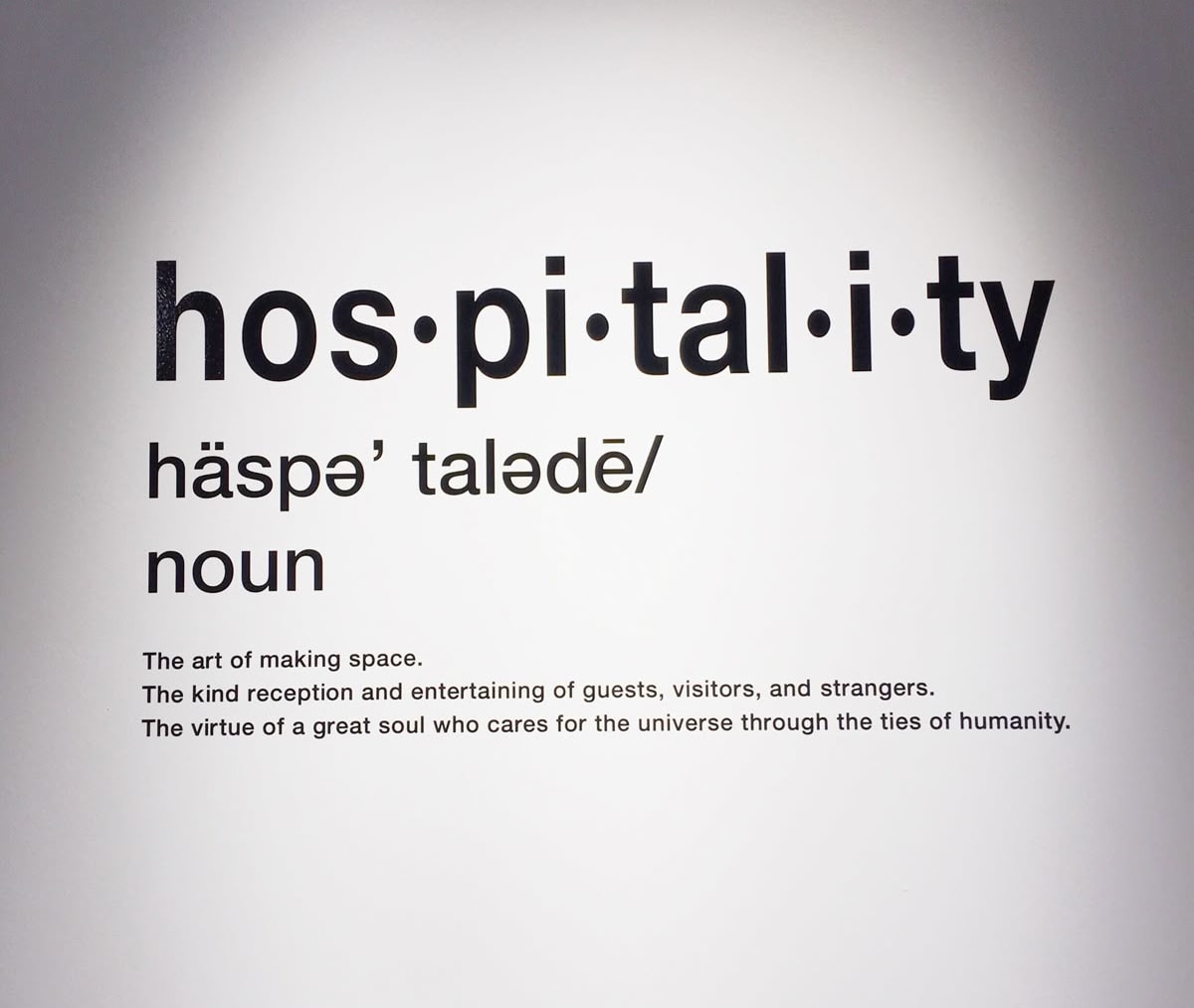
Somewhere on a museum wall, someone once wrote out the plain definition of the word: the art of making space. The kind reception of guests, visitors, strangers. You already knew this before anyone put it into a sentence. You did not get into this for a spreadsheet. A stranger showed up tired, you turned a room into somewhere they could rest, and that felt like something worth doing.
That instinct of yours also happens to sit inside one of the fastest-growing industries in the country, and we thought you should have the numbers behind it, because nobody tells hosts this part.
The numbers nobody tells hosts
India's homestay and short-term rental market is worth an estimated $1.2 to 3.5 billion in gross bookings, growing 14 to 19% a year, one of the fastest-growing such markets anywhere. Airbnb itself has called India one of its fastest-growing markets, nights booked up 50% year-on-year in the last quarter of 2025 alone. Roughly 156,000 Indian listings are live on Airbnb today. MakeMyTrip added 49,000 new homestay rooms in a single quarter, up 35% year-on-year, and homestays now make up one in every ten room nights the platform sells.
You are also, statistically, the majority, not the exception. About 90% of Airbnb's 8+ million global listings belong to individual or small hosts like you, not professional management companies. Most of what a guest sees before booking still runs through an OTA, roughly 59% of India's online accommodation bookings do, the rest is direct, mostly over WhatsApp, which is where 535 million Indians already are, probably you included.
That gap has a plain cost. If three in five online bookings in India happen through an OTA, and Airbnb is the only one carrying your listing, most of that demand never reaches you at all, it goes to whichever nearby homestay happens to already be on Booking.com or MakeMyTrip instead.
The newer channel: AI search
There is a newer channel too, and you do not need to be technical to understand why it matters. People are starting to ask ChatGPT or Gemini for the best homestay in a place, the same way they used to type it into Google. When your property is listed with us, it becomes part of a catalogue those AI tools can actually read and recommend directly, we already publish one for the homes on fursat.fun. And because a Fursat booking always closes with a real person on WhatsApp, not an anonymous form, when an AI sends someone your way, we are still the ones carrying that conversation through to a confirmed, paid booking, end to end.
None of that changes the two real frustrations of running this business day to day: the commission every OTA takes (12 to 25% in India, Booking.com nearer 15 to 18%), and the fact that adding a second or third channel usually means handing your calendar, and your account, over to someone else.
We want to talk about that second one, because we suspect it is exactly why you have not added Booking.com yet.
What actually changed at Booking.com
Booking.com is pulling host-set prepaid rates and routing guest payment through its own system, Payments by Booking, which it holds and pays out on its own schedule. Its virtual-card processing fee is going up too, from around 1% to about 3%. The platform's stated reason is fraud, fake prepayment links, which is a real problem worth solving. The practical effect for you is that the cash-flow tool you used to lock in a booking now sits on Booking's side, at a higher fee, on their timeline, not yours.
That is a fair reason to be cautious about Booking.com specifically. It is not a reason to give up on every channel beyond Airbnb, and it is not only Booking.com moving the furniture: Airbnb itself now applies a mandatory 15.5% host-only service fee to any listing connected through a full PMS, exactly the kind of tool that also asks you to hand over your account. The pattern across every major channel manager, Guesty, Hostaway, Lodgify, is the same: connect fully, and they become the source of truth, not you.
What we actually do
You already do the hard part of this business, the actual welcome. Booking.com is not a new skill to learn, it is one more door with the same welcome behind it, and the door is the only thing we are asking to open.
So here is what we actually do, plainly, because we would rather you heard it from us than found it out the hard way with someone else. Your existing Airbnb listing stays yours: same account, same reviews, same ranking, same payouts, nothing moves to a new system or a new URL. What does change is that you connect us as your channel manager, the same authorization screen you would use to approve any co-host tool, inside your own Airbnb dashboard. We never see or hold your password. That connection is also what lets one calendar cover every channel, so a booking on Booking.com closes the date on Airbnb the same minute. If your property has more than one room, we typically also add per-room listings under that same account, Room 1, Room 2, the whole house, so guests get more ways to book you, not a second account for you to manage. What we build beyond that is the channels you are missing, Booking.com, MakeMyTrip, Goibibo, Agoda, and we only earn when those new channels bring you a booking.
The one real risk of adding channels yourself is a double booking, the same night sold twice because two calendars never talked to each other. That is exactly what we run underneath every property we connect: one calendar, synced across every channel, so a booking on one closes the date everywhere else.
And the part of Booking.com's change that stung hosts most, trusting a payment link you never saw a human behind, we settle differently. Guest payment happens over a real WhatsApp conversation, by UPI or bank transfer, arranged with an actual person on our side, not typed into a checkout box days before anyone has spoken. A booking someone paid for and a human confirmed is a booking that sticks. Our own numbers put cancellation at 6.7%, against a published industry benchmark (Cloudbeds, 2026) of 21.8% for OTA bookings generally.
That 6.7% is not a marketing rounding, it is real, live data across the network, hosts in 12+ states. Meghalaya and Uttarakhand carry the most volume so far, and coastal properties like the ones in Goa carry the highest average booking value, a handful of stays near ₹50,000 each. None of this is Booking.com-scale, and we are not pretending otherwise, but it is real, live booking data, not a projection.
Always the first to answer
One more thing, plainly, because it changes how many of these bookings you actually win in the first place: we answer every guest message the moment it arrives, at 2pm or 2am. A good share of homestay bookings happen in the last few hours before someone needs the room, and between two similar listings, the traveller usually books whichever host answers first. Every major OTA also factors response speed into how visible your listing is to the next guest, so answering fast is not only about winning that one booking, it keeps you top of mind for the next search too.
If Airbnb is your only channel today, and you have never gotten around to listing on Booking.com or the others, that is fine too, and it does not require you to become a channel manager overnight. We can create and manage the new listings for you, photos, copy, and the tax and verification steps (a utility bill for address verification, a GST number for tax registration) that trip up most first listings. New listings go live as our onboarding queue and each channel's own certification process allow, so we will not promise you every channel overnight, but the path is one we have walked before, not a guess.
When you actually get paid
Here is when you actually get paid, plainly, since that question sits under everything above. Bookings through the new channels are prepaid by default, and released to you every Thursday. Agoda is the one exception: Agoda pays us on a 30-day cycle, so an Agoda booking reaches you 5 days after we receive it, not the usual Thursday. None of this touches Airbnb, that keeps working exactly as it already does, paid to you directly the same way it always has.
What it costs
Here is what it costs, plainly: ₹499 a week per property, first week free. On top of that, 10% of the revenue from the new channels we build for you, nothing on your existing Airbnb. If the new channels do not earn anything, you are only ever at the ₹499. Cancel any time, there is nothing to unwind on your side because your Airbnb was never ours to hold.
We already run this for hosts across 12+ states, 590+ properties live, 200+ bookings delivered. Our incentive is the same as yours: more bookings, or we do not get paid. This is the same team that verifies homestays for travellers on fursat.fun, now building the same thing for the hosts on the other side of those bookings.

Thank you for reading this, dear host.
See how it works for your property →